- Home
- Services
Leak detection services for new build homes
Six places a new home leaks, what you tend to notice and how each one is found. Every survey starts non-invasive, and pipework leaks can also be quoted for repair.
New build water supply pipe leak detection
On a new estate the water main runs in the road, and a supply pipe carries water from the meter or boundary box to your kitchen, usually in blue plastic under the new driveway, paths or garden. A joint that was not made up properly, a pipe nicked when a fence post went in, or a sharp stone in the backfill can all start a leak, and the ground hides it well.
What you tend to notice
- The meter turns, or its small dial spins, with every tap and appliance off
- Block paving or tarmac that sinks, or a patch of lawn that stays wet in dry weather
- Low pressure at the kitchen tap, or a water bill far higher than the house should use
How it is found
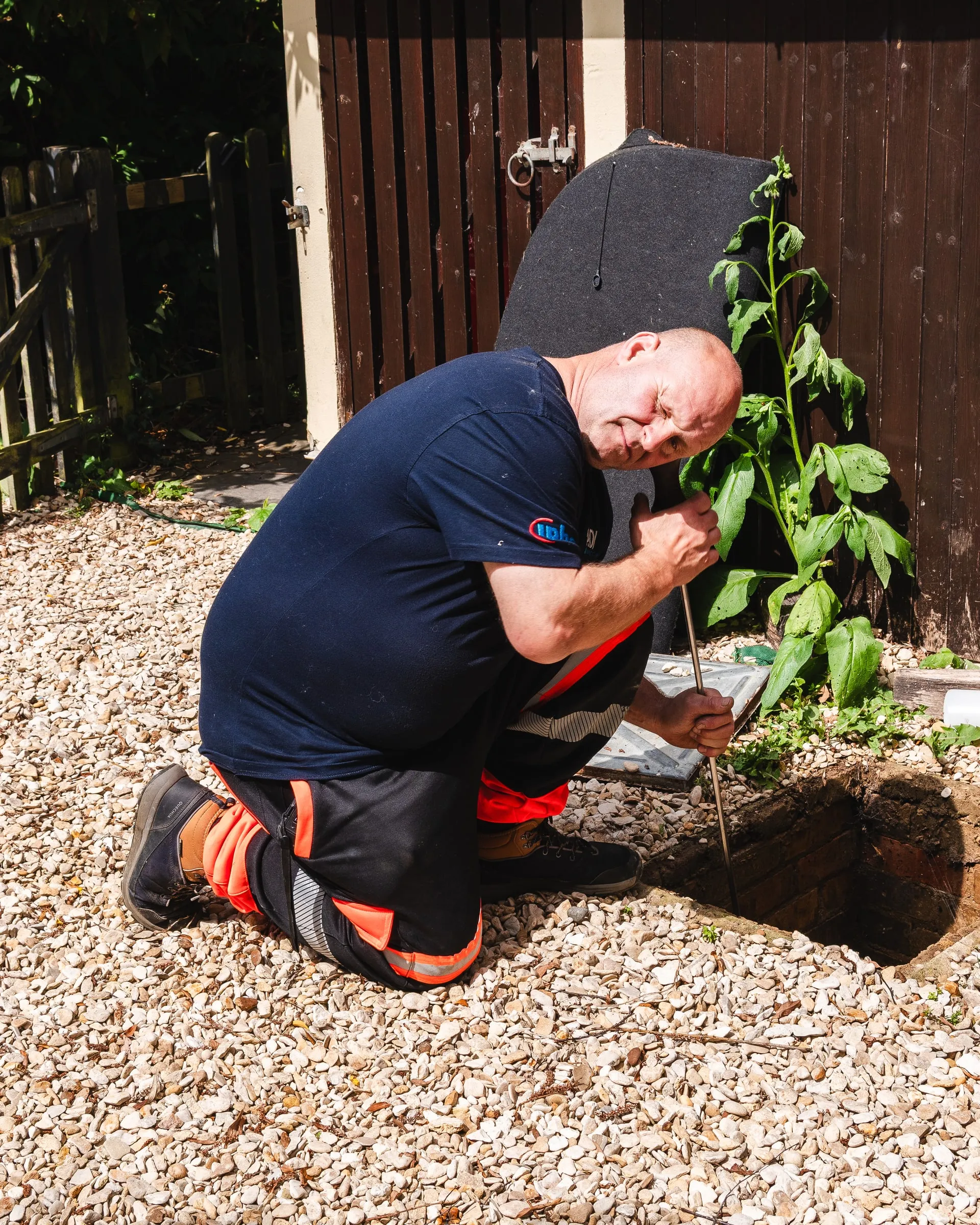
Acoustic ground microphones listen for escaping water along the pipe route. Plastic pipe carries sound poorly, so tracer gas is often used as well: it goes into the isolated supply, rises through the ground at the leak and is picked up at the surface. A trace wire maps the route so the dig goes in the right place.
Repairs
Supply pipe repairs can be quoted, including a small excavation, the repair and a pressure retest before the engineer leaves. Where the builder is still responsible, the report gives them the exact spot.
Call 0333 567 2625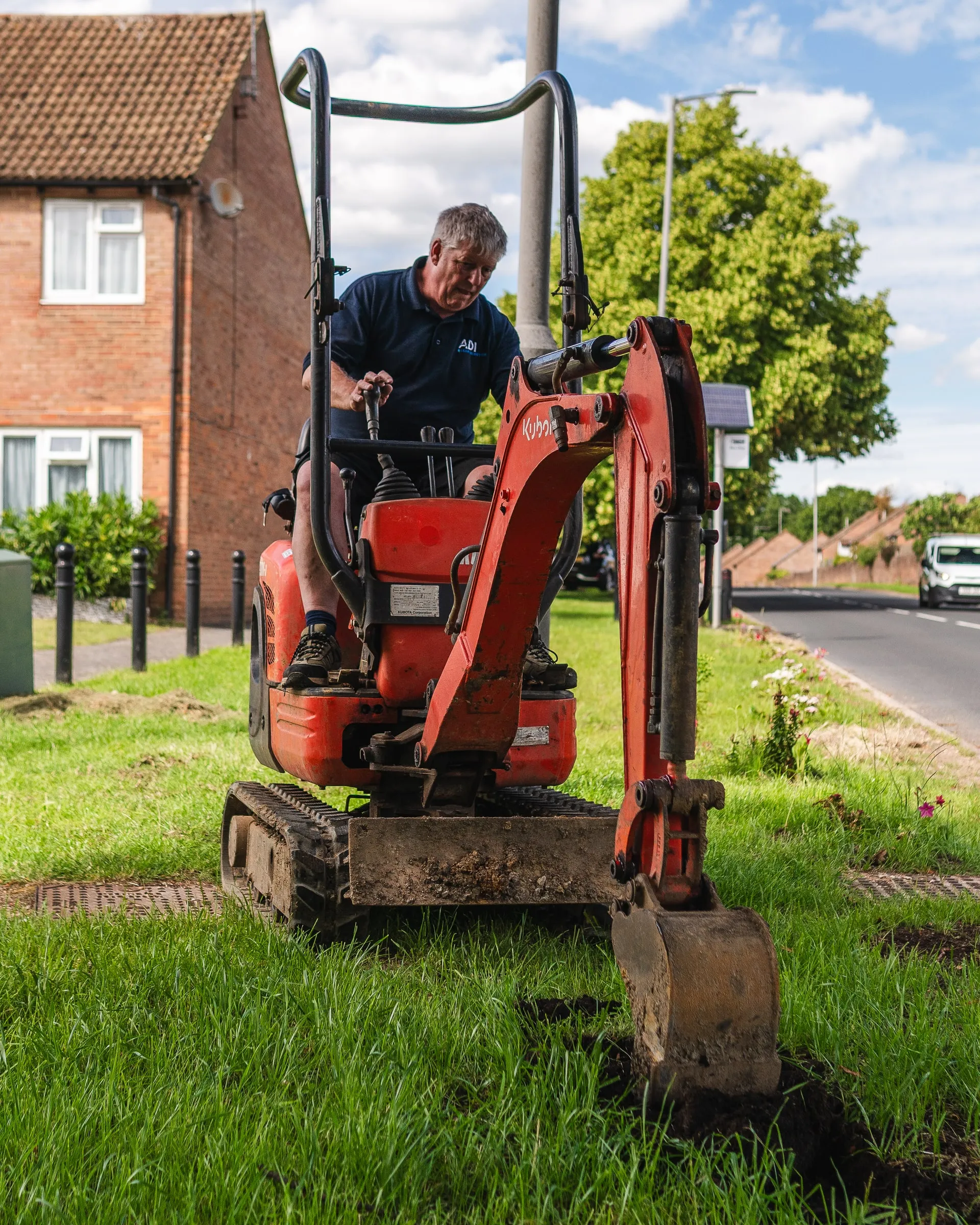
Underfloor heating leak detection in screed floors
Most new houses now have underfloor heating downstairs: loops of plastic pipe clipped to insulation, fed from a manifold and buried in screed. A loop damaged while the screed went down, or pierced later by a fixing for a door stop or a kitchen plinth, leaks straight into the floor.
What you tend to notice
- The heating needs topping up, or the boiler keeps showing low pressure
- A damp or warm patch in one spot, darkening grout, or skirting boards that swell
- Salts or damp around the manifold cupboard
How it is found
Each loop is isolated at the manifold and pressure tested to find the one losing water. Thermal imaging with warm water running through the loop shows where the pipes really run, which is often somewhere other than the drawings say. Acoustic listening and tracer gas then pinpoint the leak so the opening in the screed stays as small as possible.
Repairs
Underfloor heating pipe can be quoted for repair, and the loop is pressure tested afterwards. Relaying tiles or flooring over the repair is for your flooring fitter or the builder.
Call 0333 567 2625Leaking pipes in new build walls and ceilings
New homes are plumbed in plastic pipe with push-fit joints, run through the joists and behind plasterboard. It is quick to fit and very reliable when it goes in right. A joint that was never pushed fully home, or a pipe caught by a screw, can hold for months and then start to weep.
What you tend to notice
- A stain or bulge in a ceiling below a bathroom, en-suite or airing cupboard
- Damp plaster or a swelling skirting board with no obvious source
- Water appearing after something was fixed to a wall, such as a TV bracket, a shelf or kitchen units
How it is found
Moisture mapping shows how far the water has spread and where it is wettest. Pressure testing separates the hot and cold supplies and the heating. Thermal imaging follows hot pipes through the wall, and a borescope camera through a small hole confirms the leak before any plasterboard comes off.
Repairs
Pipework repairs can be quoted and carried out. Making good the plaster and decoration is for the builder or your decorator, with the report to work from.
Call 0333 567 2625New build heating and hot water leak detection
A boiler that keeps dropping pressure in a nearly new house is one of the most common calls. The leak is usually somewhere out of sight: a radiator pipe where it goes into the floor, a joint in the airing cupboard, a pipe in the screed, or a relief valve quietly discharging outside.
What you tend to notice
- The boiler needs repressurising every few days or weeks
- A damp floor in the airing or cylinder cupboard, or by a radiator where the pipes go into the floor
- A pipe on an outside wall that drips now and then, usually from the boiler or cylinder relief valve
How it is found
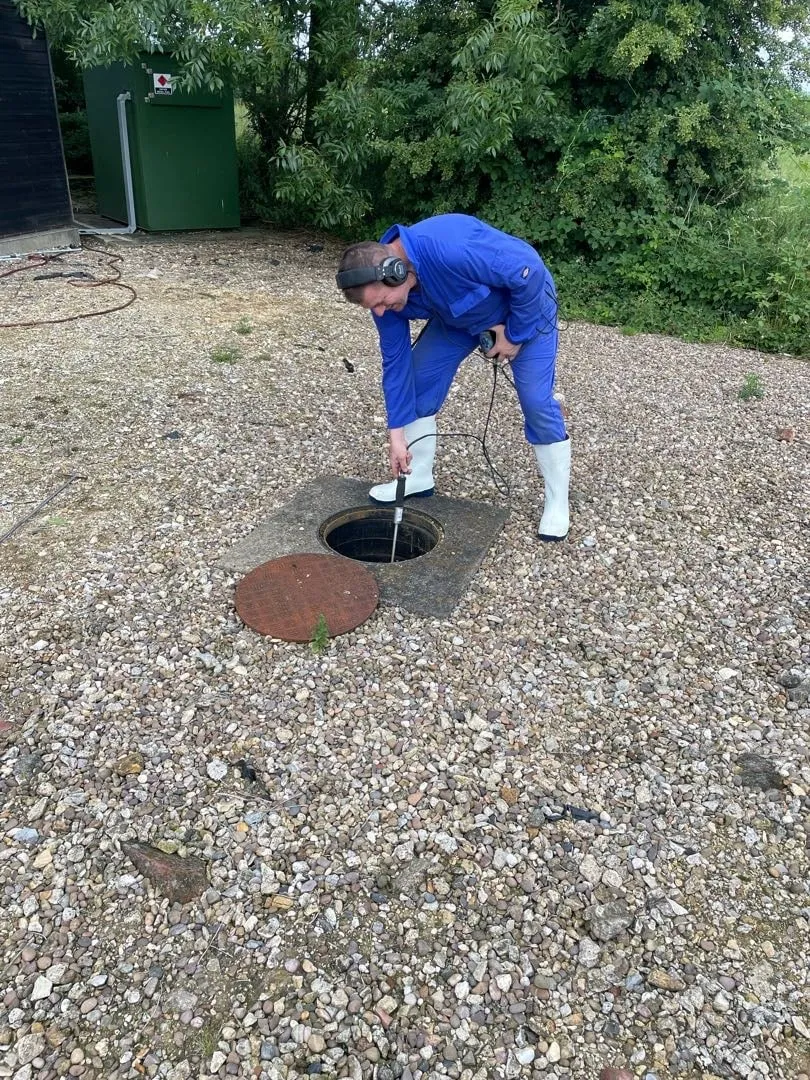
Pressure testing isolates the circuits one by one. Thermal imaging follows the flow and return pipes through floors and walls, tracer gas finds a buried leak on the heating side, and acoustic listening and moisture readings settle the exact spot.
Repairs
Heating pipework leaks can be quoted and repaired. Faults inside the boiler, the cylinder or their valves are reported for a heating engineer or the builder. The domestic "no find, no fee" terms do not cover central heating systems.
Call 0333 567 2625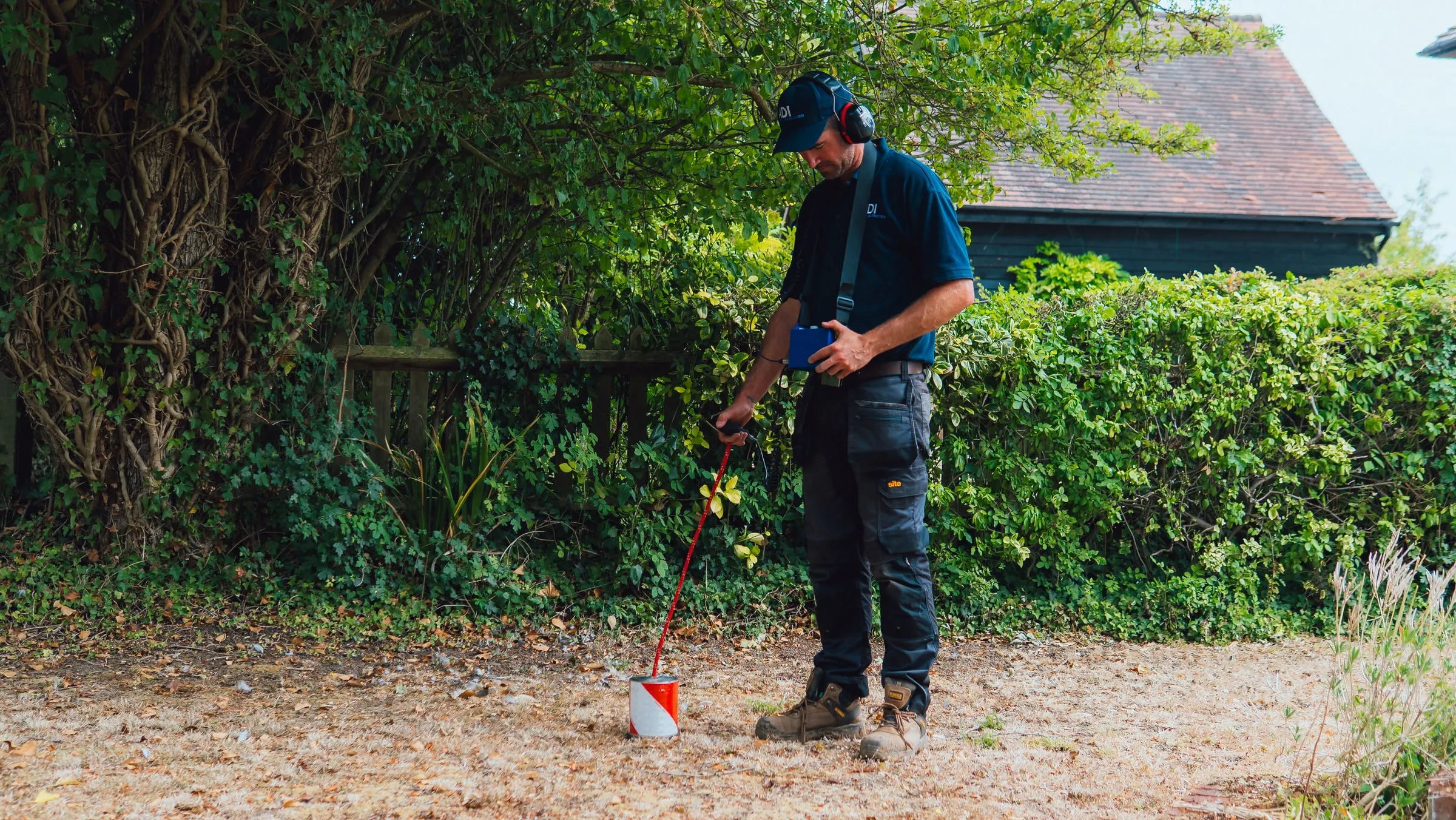
New build shower and bathroom leak detection
Showers are behind a large share of new build leaks. A tray set on a floor that is still drying and moving, silicone that never cured, a waste that was not sealed, or a tiled wet room without a watertight layer underneath: each one shows up as water through the ceiling below.
What you tend to notice
- A ceiling stain below the shower that grows when it is used
- Loose or hollow-sounding tiles, or grout that stays dark
- A musty smell, or water around the base of the tray or toilet
How it is found
Dye tests on the tray, the screen, the seals and the waste show which part is letting water through, one at a time. Moisture mapping follows the water, a borescope looks into the ceiling void, and a pressure test of the supplies rules the pipes in or out.
Repairs
Leaking supply and waste pipework can be quoted. Trays, seals, tiling and wet room membranes are for the builder or your fitter, with photographs of exactly what failed.
Call 0333 567 2625Leaking roofs, windows and balconies in new builds
Rain getting into a new home often shows up well away from the defect: at a window head, below a flat roof or balcony, or where a flue or soil pipe goes through the roof. It can also be a pipe leak that only looks like rain, which is why the plumbing gets ruled out first.
What you tend to notice
- Damp around a window or door frame after heavy rain
- A stain on the ceiling below a flat roof, balcony or dormer
- Water that appears in wet weather and dries out between storms
How it is found
Moisture mapping and thermal imaging from inside show where the water is arriving. On a flat roof or balcony, dye, tracer gas or an electronic roof leak detector finds the defect in the membrane. Pressure testing the pipes first proves whether it is rain at all.
Repairs
ADI locates roof, window and structural leaks and reports them with photographs. The repair is for the builder, a roofer or the window installer.
Call 0333 567 2625Not sure which of these you have?
Most people are not. Describe what you are seeing and where, and the office team will work out which kind of investigation fits and whether it can be done in one visit.
- Monday to Friday, 7:30am to 6:30pm
- Calls reach ADI Leak Detection's office in High Wycombe. Engineers cover England, Scotland and Wales.