Underfloor heating beneath screed
Provide the manifold layout and failed circuit test. Agree access beneath finished flooring separately.
For a West Midlands new-build heating leak, provide pressure records and photographs of any damp ceiling patch. The Walsall case below records two loose fittings, targeted ceiling access and a timed retest. Agree access and responsibility for making good before work starts.

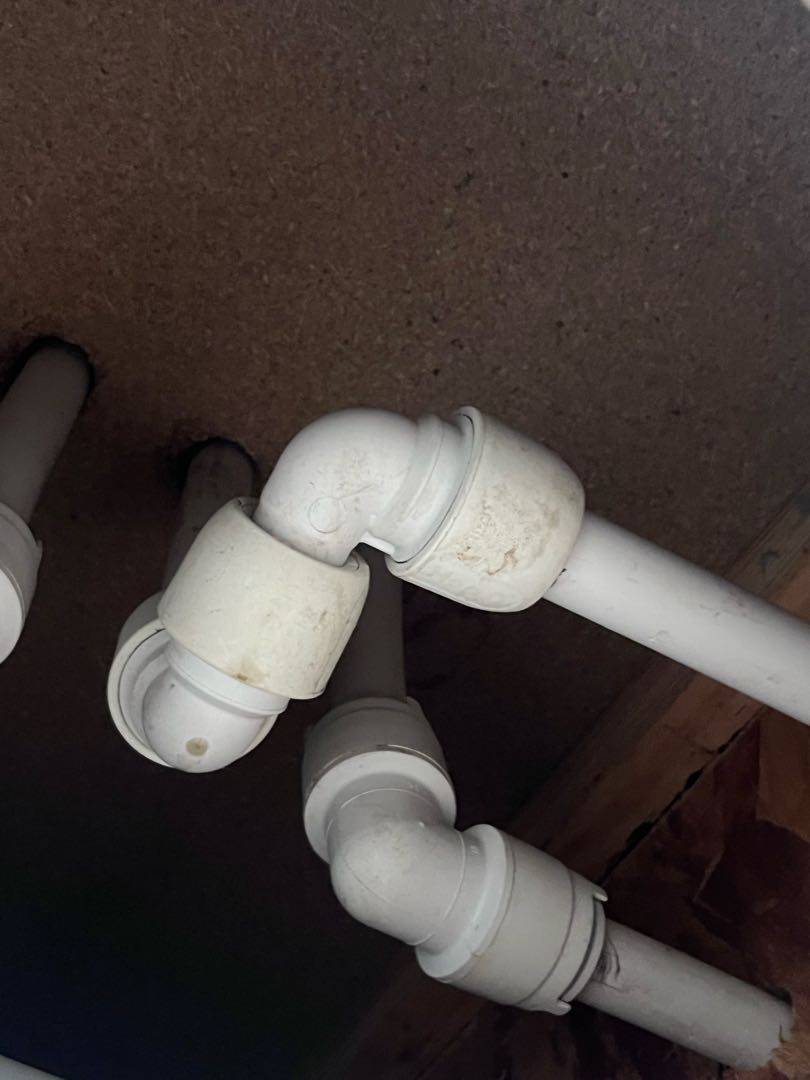
In June 2025, ADI investigated heating pressure loss and a damp ceiling patch at a property in Walsall, West Midlands. The original engineer report describes it as a new build. Pressure was dropping within a few hours.
With the customer’s permission, the engineer opened a small section of the already damaged ceiling. Two 22mm elbow fittings had not been tightened properly. The system was drained, two replacement fittings were installed, and the system was refilled.
The system maintained 1.8 bar during a 30-minute retest. The report recommended allowing the ceiling to dry before patching it and arranging checks of the pressure-relief valves and expansion vessels. Those additional works were not recorded as completed.
Start with what you have noticed. The survey tests the possible sources before deciding where access is needed.
Provide the manifold layout and failed circuit test. Agree access beneath finished flooring separately.
Identify the plot’s meter and shared connections before testing a supply beneath new paving.
Share installation drawings and pressure records to separate heating faults from hot or cold supply leaks.
Note whether staining follows use or rain. Roofing, windows and finishes require the appropriate repair trade.
Pressure tests, surface readings, acoustics and tracer gas can help narrow the search. Available isolation, system readiness and access determine what can be tested. Any opening or pipe repair is agreed separately.
Isolation and pressure tests help determine which supply or circuit needs further investigation.
Temperature, moisture and sound can guide the search. The engineer selects suitable methods for the materials and access available.
Test indications may require targeted access. Agree further work separately and distinguish recommendations from completed repairs.
Keep a record of damp, water use and pressure changes. Send earlier test results and repairs, and establish what evidence the developer or warranty provider requires before authorising work.
Read the new-home warranty guideIdentify the affected plot and any shared supply. Confirm induction requirements, isolation authority and access to the pipework or surfaces being investigated.
Prepare for the engineer’s visit
New Build Leak Detection, a specialist service from ADI Leak Detection. ADI started in 2011 and has more than twenty-five leak investigation engineers across England, Scotland and Wales, working in finished homes and on building sites.
Selected excerpts from five-star reviews of ADI’s wider service across the UK.


Read the full review“Very helpful and professional from first contact with the call centre through to the plumber sorting the leak.”
Read the full review“A job well done. The engineers, Kristof, Gabor and Vincent, turned up when expected and made sure excavated areas were made safe before they left.”
The West Midlands county comprises Birmingham, Coventry, Dudley, Sandwell, Solihull, Walsall and Wolverhampton. It is distinct from the wider West Midlands region. Provide the property postcode to confirm survey arrangements and availability.
The survey records observed conditions and test results. It does not decide liability or warranty cover. Ask the developer, warranty provider or insurer what evidence they need and keep earlier commissioning records available.
Provide plot identifiers, pipe and drainage drawings, commissioning results, previous repairs and the current occupation status. Identify who can isolate services and authorise any additional access or repair.
Provide the full postcode, property type, symptoms, previous investigations and access restrictions. Confirm the nominated site contact and who can authorise work. The office will discuss the scope, quote and current availability.
After two elbow fittings were replaced, the system maintained 1.8 bar for 30 minutes. That was the result during the recorded test, not a guarantee against future faults. Ceiling making-good and checks of the pressure-relief valves and expansion vessels remained follow-up recommendations.
Give the office the postcode, the plot or flat number and the build stage, and say who controls access to the property. The team will talk through the survey, the price and when an engineer is free.
